Compared to the other field trips, we could afford to wake
up relatively late this time for our much anticipated trip to Sungei Buloh
Nature Reserve (SBNR). Cheryl wasn't there as she had an art exhibition, the
rest of us had to take decent pictures with our less than amateur skills. (Jeff was horrible and took many blurry shots)

The bus set off quite early because the previous year, there was a traffic jam and students reached there late. But this time, we were around 1 hour early so we could sit down and wait or walk around taking the pictures of the exhibits, which were pretty fascinating. Jefferson was the only person going there by himself. The rest of us heard that if anyone came after 8.30am, they would have to pay a fine. So we immediately called Jeff and told him to rush there asap unless he wanted to pay the fine. By the time he reached there, he was sweating a lot, but later found out that the fine was only $0.50. And he got real angry at us :P
 Around 9.00am, we met our guide, Ms Wang
Luan Keng, who we later found out to be the co-writer and compiler of a very
useful reference book. She is a very fun person and gives good
suggestions on how to take proper pictures although we were still too amateur to heed her advice. Since almost all the organisms were
mostly within the mud, it was really hard to get a decent shot of them. Still,
with our "less than awesome" skills, we somehow got a pic of almost every organism she told
us about. Though they were pretty blurry and hard to see.
Around 9.00am, we met our guide, Ms Wang
Luan Keng, who we later found out to be the co-writer and compiler of a very
useful reference book. She is a very fun person and gives good
suggestions on how to take proper pictures although we were still too amateur to heed her advice. Since almost all the organisms were
mostly within the mud, it was really hard to get a decent shot of them. Still,
with our "less than awesome" skills, we somehow got a pic of almost every organism she told
us about. Though they were pretty blurry and hard to see.

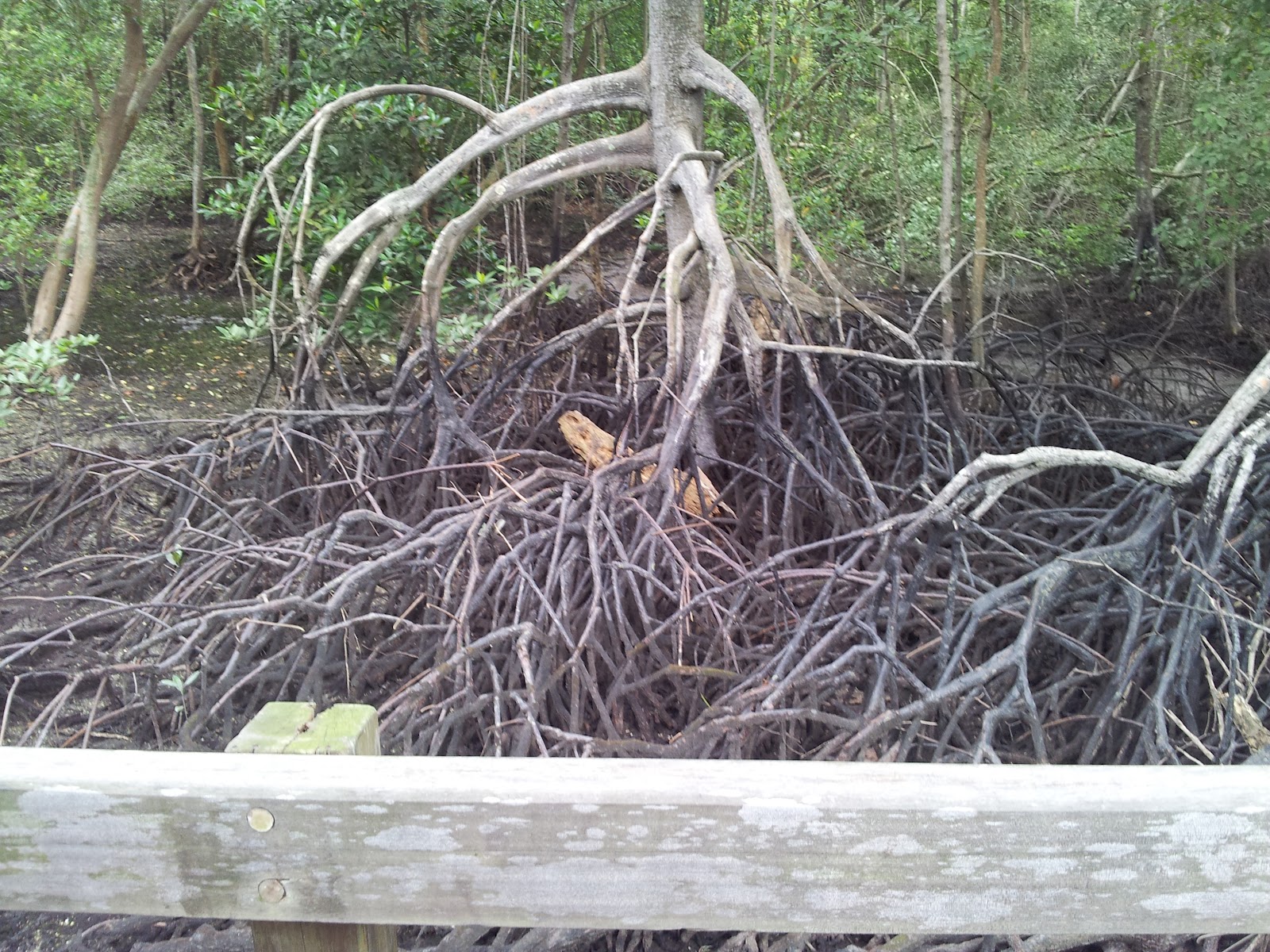
Surprisingly, the muddy swamp wasn't as barren as we expected it to be. Basically, it could be divided into areas, such as the back mangrove, fresh water and core mangrove swamp. Of course, in a mangrove swamp, there are a lot of mangroves, which need a lot of adaptations to survive. Many of these are really cool and interesting to know, like how they use their aerial roots to breath and cope with oxygen deficient roots. They also have special salt glands to get rid of salt, a lot like us sweating or tearing. This helps it get rid of all the excess salt. Some mangroves have ultra-filtration systems which can easily get rid of salt but others need to transport the excess salt to one leaf, then drop the leaf off.
 There
were few rare but awesome looking trees like the “strangling fig”. Its
bird-dispersed seed germinates on top of other trees, from which its roots
grows down and strangles the host tree. We also saw the fishtail palm, which has
poisonous fruits that cause swelling of the mouth. The difference between the
back mangrove and core mangrove swamp are stark. The back mangrove is mostly
littered with mud lobster mounds, which other animals also use as burrows or
other purposes, such as tree climbing crabs, sea holly and mangrove ferns..
Mainly, it is drier there with less salt influx. There was a lot of high
pitched noise there, which were caused by cicada. We were also freaked out to
hear that usually, whenever there is a lot of water dropping from trees, it is
actually cicadas peeing together, which was just utterly disgusting -.- Imagine us getting peed at.
There
were few rare but awesome looking trees like the “strangling fig”. Its
bird-dispersed seed germinates on top of other trees, from which its roots
grows down and strangles the host tree. We also saw the fishtail palm, which has
poisonous fruits that cause swelling of the mouth. The difference between the
back mangrove and core mangrove swamp are stark. The back mangrove is mostly
littered with mud lobster mounds, which other animals also use as burrows or
other purposes, such as tree climbing crabs, sea holly and mangrove ferns..
Mainly, it is drier there with less salt influx. There was a lot of high
pitched noise there, which were caused by cicada. We were also freaked out to
hear that usually, whenever there is a lot of water dropping from trees, it is
actually cicadas peeing together, which was just utterly disgusting -.- Imagine us getting peed at.

 The core mangrove smap
was a lot human-friendly. Apparently, there were poisonous plants which
could blind people simply by a small lick. But also, there were horseshoe
crabs, whose blood prevents infections and have a huge potential in the
medicinal industry. Here, instead of mud lobster mounds, there were mainly
aerial roots of mangroves. There were many cool trees there like the narita,
nipha and rhizophora apiculata. After the mangrove boardwalk, we went through
the main bridge to the aquatic plant pond. Many foreign birds come here to migrate
in search of a better climate. There was a plaque in which descriptions of non-indigenous birds are written. Towards the end, we found out, to our shock,
that Ms Wang’s book was actually a well-known reference book which we probably had heard of.
The core mangrove smap
was a lot human-friendly. Apparently, there were poisonous plants which
could blind people simply by a small lick. But also, there were horseshoe
crabs, whose blood prevents infections and have a huge potential in the
medicinal industry. Here, instead of mud lobster mounds, there were mainly
aerial roots of mangroves. There were many cool trees there like the narita,
nipha and rhizophora apiculata. After the mangrove boardwalk, we went through
the main bridge to the aquatic plant pond. Many foreign birds come here to migrate
in search of a better climate. There was a plaque in which descriptions of non-indigenous birds are written. Towards the end, we found out, to our shock,
that Ms Wang’s book was actually a well-known reference book which we probably had heard of.


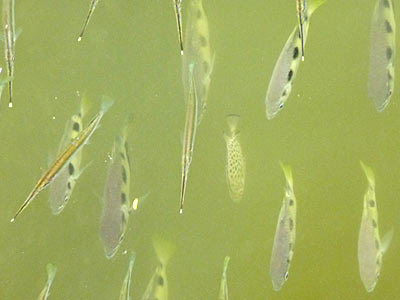
From this trip to SBWR, we have learnt that marine organisms are not only found in the deep blue sea and the shorelines, but in swampy lands as well. We did not expect to find such a great diversity of marine organisms in land. There were the mud lobsters, mud crabs, oysters, archer fish, mudskippers just to name a few. We have also learnt that we should not catch animals in the wild at such a large scale. The tour guide was telling us that there used to be an abundance of crabs and lobsters in the wetland area to catch but due to excessive hunting in the past, presently catching crabs and lobsters would not bring a huge catch as there are not so many of them left in the wild.

The bus set off quite early because the previous year, there was a traffic jam and students reached there late. But this time, we were around 1 hour early so we could sit down and wait or walk around taking the pictures of the exhibits, which were pretty fascinating. Jefferson was the only person going there by himself. The rest of us heard that if anyone came after 8.30am, they would have to pay a fine. So we immediately called Jeff and told him to rush there asap unless he wanted to pay the fine. By the time he reached there, he was sweating a lot, but later found out that the fine was only $0.50. And he got real angry at us :P


Surprisingly, the muddy swamp wasn't as barren as we expected it to be. Basically, it could be divided into areas, such as the back mangrove, fresh water and core mangrove swamp. Of course, in a mangrove swamp, there are a lot of mangroves, which need a lot of adaptations to survive. Many of these are really cool and interesting to know, like how they use their aerial roots to breath and cope with oxygen deficient roots. They also have special salt glands to get rid of salt, a lot like us sweating or tearing. This helps it get rid of all the excess salt. Some mangroves have ultra-filtration systems which can easily get rid of salt but others need to transport the excess salt to one leaf, then drop the leaf off.




From this trip to SBWR, we have learnt that marine organisms are not only found in the deep blue sea and the shorelines, but in swampy lands as well. We did not expect to find such a great diversity of marine organisms in land. There were the mud lobsters, mud crabs, oysters, archer fish, mudskippers just to name a few. We have also learnt that we should not catch animals in the wild at such a large scale. The tour guide was telling us that there used to be an abundance of crabs and lobsters in the wetland area to catch but due to excessive hunting in the past, presently catching crabs and lobsters would not bring a huge catch as there are not so many of them left in the wild.